What is a parti sapphire?
A parti sapphire shows two or three distinct colours in one stone, and Queensland's Gemfields are one of the best places on earth to find one. Here's what they are, what makes them valuable and how to spot one in…
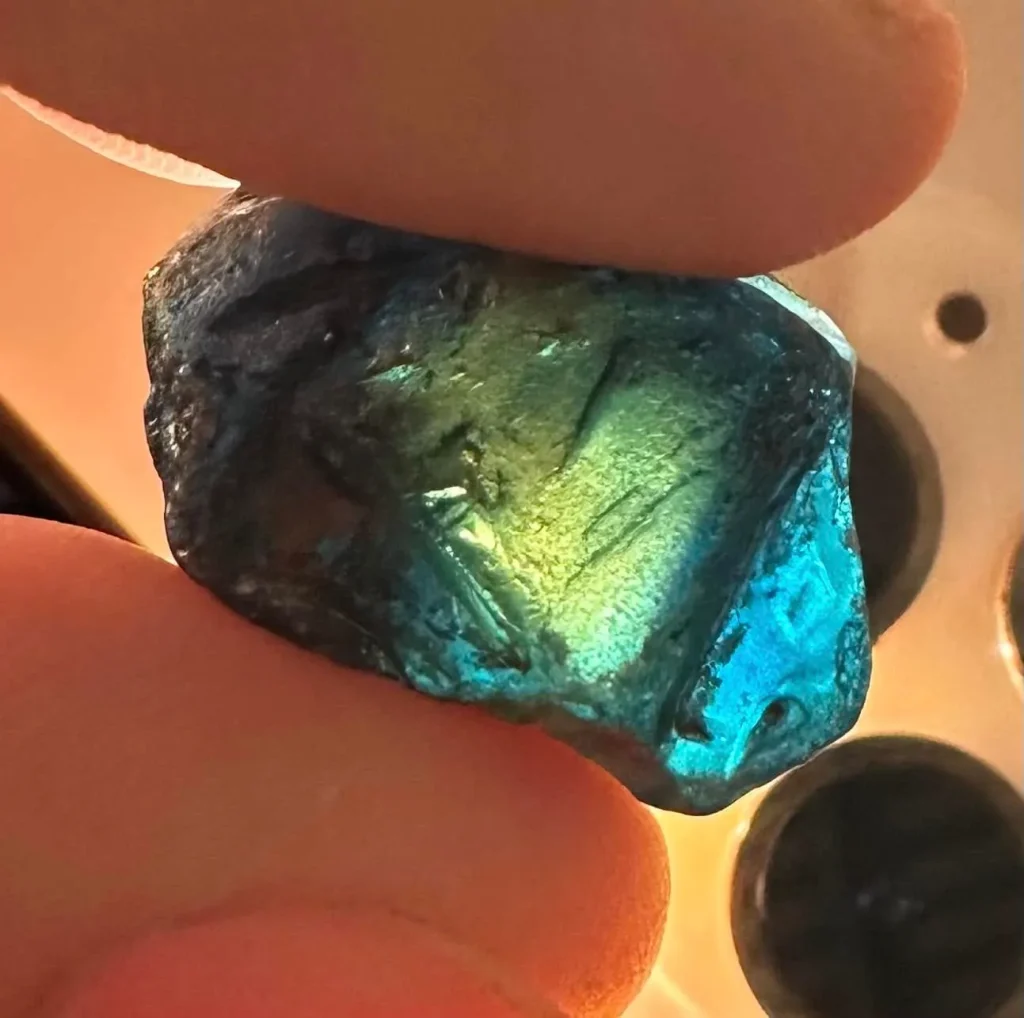
A parti sapphire is a single sapphire that shows two or three distinct colours, usually yellow, green and blue, sitting side by side in one stone. The name is short for “parti-coloured”, meaning made up of different colours, and Australia is the world’s most abundant source. Many of the finest come out of the ground on the Central Queensland Gemfields, around Rubyvale, Sapphire and Anakie, which makes this one of the best places on earth to find a parti sapphire of your own.
At a glance
- What it is: one natural sapphire showing two or three distinct colours
- Most common colours: yellow and green, with blue, teal and lavender zones the most prized
- Where they come from: mainly Australia, along with Montana in the USA and East Africa
- What makes one valuable: a crisp, well-centred colour divide, rich medium tones and a cut that shows off every colour
- Find your own: fossick for one on the Queensland Gemfields with the Jeb’s Gems Tag Along Tour
What is a parti sapphire?
A parti sapphire is a natural sapphire with clearly separate zones of colour. Where a teal sapphire blends blue and green into one even shade, a parti keeps its colours apart, with a visible line or partition between them. Look at a good parti sapphire face-up and you’ll see all its colours at once, from any angle.
Jewellers and gem dealers sometimes call them bi-colour or tri-colour sapphires, depending on how many colours they show. “Parti” is a trade name, so a gem laboratory report will describe the same stone as something like “zoned yellow and blue sapphire”.
What colours do parti sapphires come in?
Yellow and green is the most common parti sapphire combination. Blue, purple and lavender zones are rarer and especially prized, and a stone showing three distinct colours is a real treat to find.
Queensland sapphires cover a wide spread of colour, from deep inky blue through teal and green to bright golden yellow, so the Gemfields produce partis in almost every combination:
- Yellow and green, the classic Australian parti
- Yellow and blue, with a sharp, eye-catching contrast
- Green and blue, often with a teal edge
- Tri-colour, with yellow, green and blue in a single stone
What gives a parti sapphire its colours?
Sapphire is a form of the mineral corundum, which is colourless when pure. Tiny traces of other elements give it colour. A few hundredths of a percent of iron and titanium create blue, iron on its own creates yellow, and a mix of the two creates green.
A sapphire crystal grows in layers over a very long time, and the chemistry around it shifts as it grows. Each change leaves a zone of different colour inside the crystal, so one stone can end up yellow in one part and blue in another. A parti sapphire is that growth history, frozen in place.
Why Queensland is famous for parti sapphires
Australia is the world’s most abundant source of parti sapphires, and the Central Queensland Gemfields is one of its great sapphire fields. The sapphires formed deep underground and were carried towards the surface by ancient volcanic activity. Over millions of years, the volcanic rock weathered away and rivers spread the sapphires through layers of gravel. Those old buried stream beds are exactly where fossickers dig today.
Sapphires were first found here at Retreat Creek in the early 1870s, and mining was under way by about 1890. Today the Gemfields stretches in an arc from Middle Ridge through Rubyvale, Sapphire, Anakie and Glenalva to the Willows, with signposted fossicking areas open to visitors. Our Rubyvale guide covers the history and characters of the area.
Parti sapphire, teal sapphire or bi-colour sapphire?
These names get mixed up often. Here’s how they compare:
| Name | What you see | Good to know |
|---|---|---|
| Parti sapphire | Two or three distinct colours, side by side | The trade name used across Australia |
| Bi-colour or tri-colour sapphire | Two or three distinct colours | Another way of describing a parti |
| Teal sapphire | Blue and green blended into one even shade | Often called a mermaid sapphire when blue and green are evenly balanced |
| Colour change sapphire | One colour in daylight, another under indoor light | A different effect altogether |
What makes a parti sapphire valuable?
Every parti sapphire is one of a kind, and value comes down to how beautifully it shows its colours:
- A crisp colour divide. Clear, distinct zones look best, ideally with the divide running through the centre of the stone.
- Medium tones. Rich, medium shades show both colours well, where very dark stones can hide the divide.
- Strong saturation. Vivid colours command higher prices.
- The colours themselves. Blue, violet and lavender zones are worth more than yellow and green, and three-colour stones usually sit a little higher again.
- The cut. Because the colours sit in zones, the way a stone is oriented when it’s cut decides which colours face up.
Parti sapphires are generally more affordable than top-quality blue sapphires, which is a big part of their appeal. When buying a cut stone, a reputable seller will happily tell you where it came from and whether it has been heat treated.
Parti sapphires in jewellery and engagement rings
Parti sapphires have become a favourite with jewellery designers and couples looking for something personal. Sapphire rates 9 on the hardness scale, second only to diamond, so it wears beautifully in an everyday ring. Every parti is different, which gives each piece its own character.
A stone you’ve dug up yourself on the Gemfields makes that story even better. Plenty of visitors take their best find home and have it cut and set into something they’ll wear for years.
How to spot a parti sapphire in your sieve
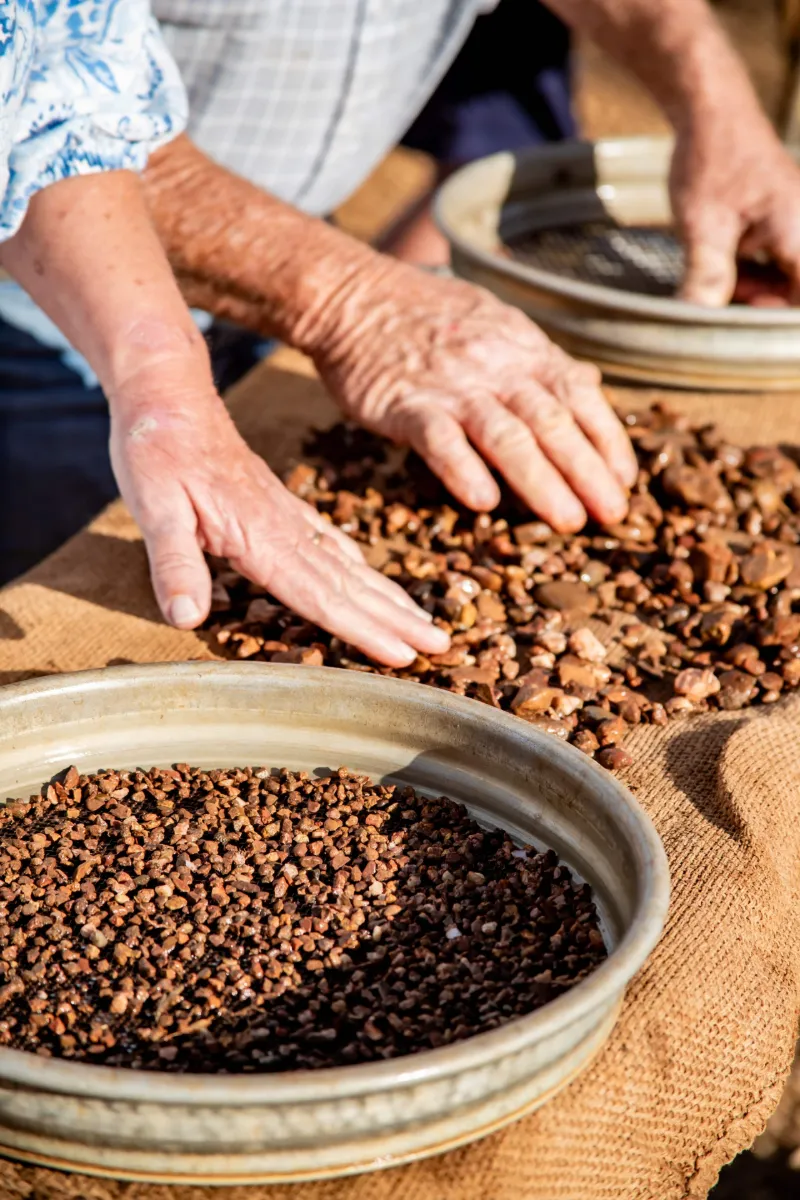
Sapphires in the rough look quite different to the cut stones in a jeweller’s window. Here’s what to look for when you’re sorting through your sieve:
- A glassy sheen. Rough sapphires have a bright, glassy look compared with the dull pebbles around them.
- Colour against the light. Hold each stone up to the sun and look through it. A parti shows two colours side by side, often yellow at one end and green or blue at the other.
- A barrel shape. Many sapphire crystals are six-sided and barrel or spindle shaped, with worn edges from their time in the old creek beds.
Zircons turn up on the Gemfields too and can look a lot like sapphires at first glance, so it pays to have someone check your finds. On the Tag Along Tour, Jeb goes through what everyone has found, stone by stone, and tells you exactly what you’re holding and what it might look like cut.
Find your own parti sapphire on the Gemfields
Jeb’s Gems Tag Along Tour
Spend a morning on the diggings with Jeb, Queensland’s Top Tour Guide 2026. He’ll show you how to read the ground, dig, sieve and spot the colour, and every guest is handed a sapphire before we even start. All the gear and your fossicking permit are included, and every stone you find is yours to keep. Tours run every day, year round, weather permitting, from $75 per adult, and you’ll need a high clearance 4WD.
See the Tag Along Tour or book your morning.
Rubyvale Miner’s Cottage
Prefer to stay close to town? At Rubyvale Miner’s Cottage, buy a bucket of gem-bearing gravel from $35 and sieve it right there, with friendly help on hand. Just turn up and see what’s waiting in your sieve. The Cottage is open from 1 March to 31 October.
Visit Rubyvale Miner’s Cottage
New to fossicking? Our first-time fossicking guide covers everything to know before your first day, and Plan Your Visit has travel times, places to stay and the best time of year to come.
Frequently asked questions
Yes. Parti sapphires are natural sapphires, the same mineral as any other sapphire, with two or more distinct colour zones inside one stone.
Parti sapphires are uncommon worldwide, and Australia is their most abundant source. Stones with blue or lavender zones, and three-colour stones, are the hardest to find.
Parti sapphires are generally more affordable than top-quality blue sapphires. Price depends on how crisp the colour divide is, how rich the colours are, the size of the stone and the quality of the cut.
They describe the same thing. Bi-colour means two colours, tri-colour means three, and parti is the trade name used for both, especially in Australia.
Yes. The Central Queensland Gemfields around Rubyvale, Sapphire and Anakie is one of the best places in the world to find parti sapphires, and visitors can fossick for them in the signposted fossicking areas with a fossicking licence.
Yes. Sapphire rates 9 on the hardness scale, second only to diamond, so a parti sapphire is tough enough for everyday wear, and every stone is one of a kind.
Ready to find a parti sapphire of your own?
The best parti sapphire is the one you pull out of your own sieve. Before you head out, check our guide to fossicking licences in Queensland and our sapphire fossicking guide, or let Jeb take care of the permit, the gear and the know-how for you.
Last updated 05/10/2026. Facts checked against the GIA sapphire guide, the International Gem Society and Queensland Places.
Ready to try it yourself?
Come and dig one up
Spend a morning on the diggings with Jeb
Every guest gets a sapphire before we even start, and every stone you find after that is yours to keep. Tours run every day, year round, weather permitting.
Keep exploring
More from the Gemfields
Guide
Sapphire Fossicking
How the sapphires got here, the tools, and how to spot the colour in your sieve.
Read the guide
Guide
First-Time Fossicking
Everything a newcomer needs for a great first morning on the diggings.
Read the guide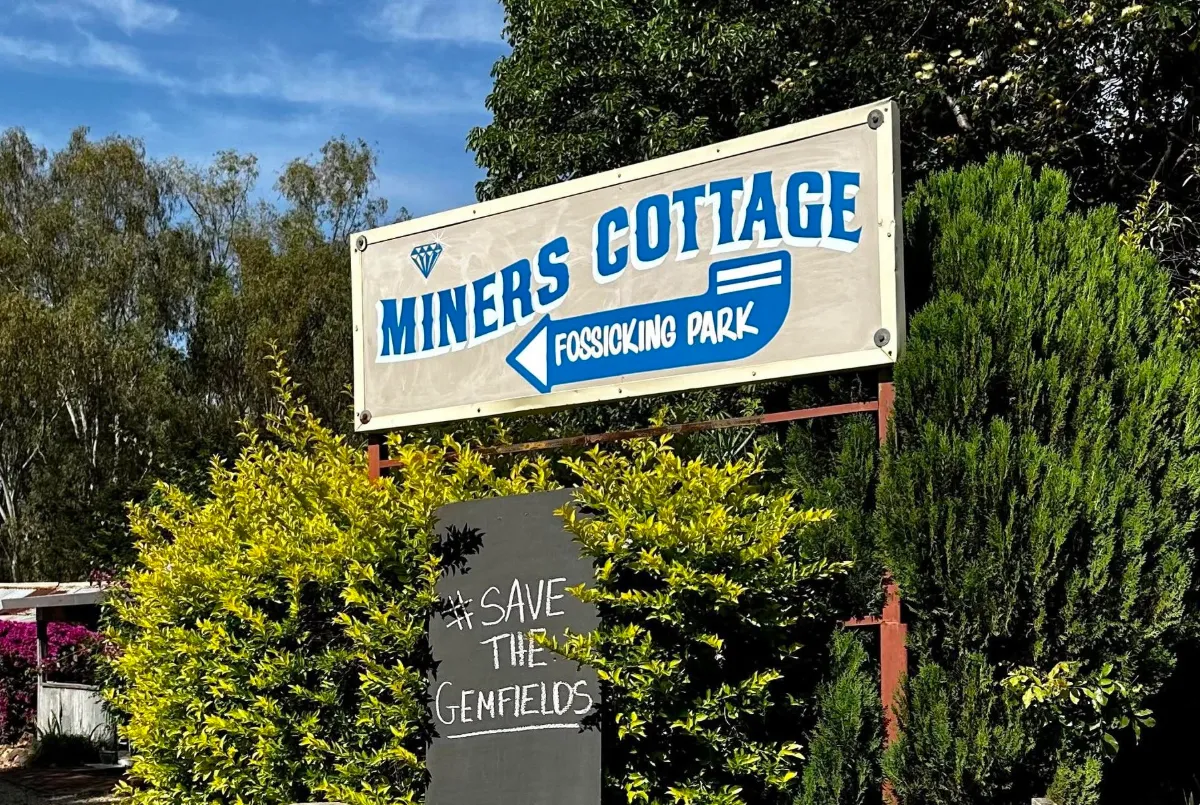
Guide
Rubyvale
The heart of the Gemfields, with history, characters and plenty to do.
Read the guide