
Queensland sapphires: colours and what they’re worth
Queensland sapphires come in blues, greens, golden yellows, partis and black stars. Here's the colours you'll find on the Gemfields, what makes a sapphire valuable, the famous finds and how to get yours cut.
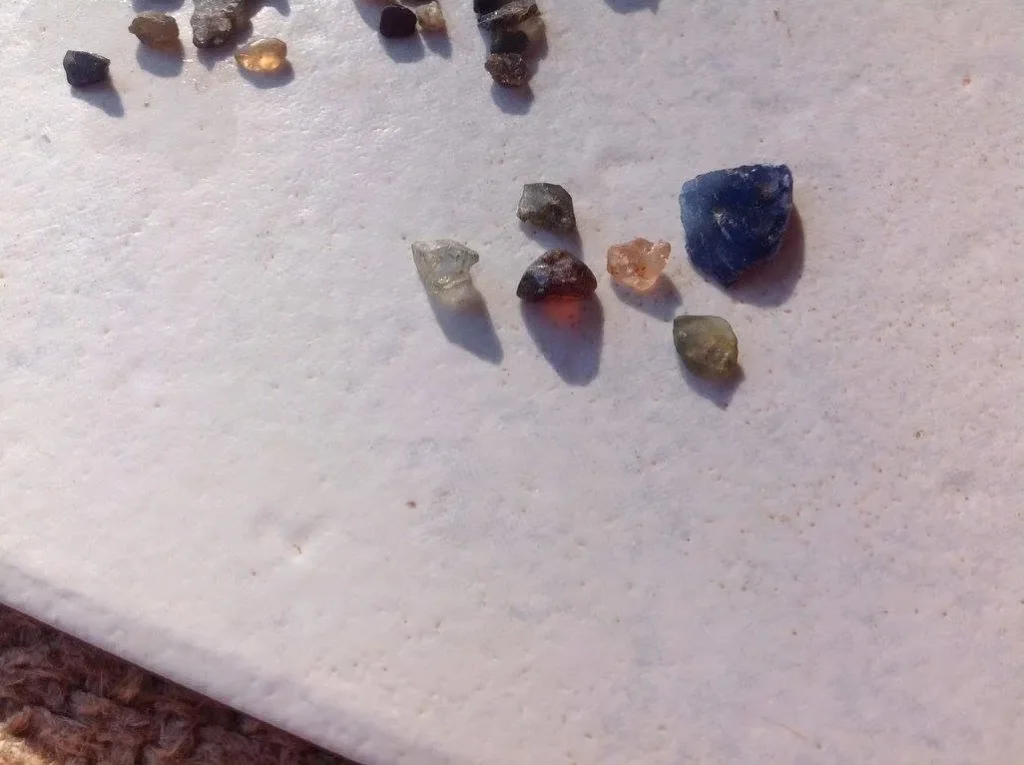
Queensland sapphires come in a rainbow of colours, from rich blues and leafy greens to golden yellows, parti sapphires and black stars, and most of them come from the Central Queensland Gemfields around Anakie, Sapphire, Rubyvale and the Willows. A sapphire’s value depends mostly on its colour, followed by clarity, cut and size. Here’s a guide to the colours you’ll find on the Gemfields, what makes a sapphire valuable, and the famous finds that put Queensland sapphires on the map.
At a glance
- Colours: blue, green, yellow and gold, teal, parti, plus star and black star sapphires
- Where: the Central Queensland Gemfields, one of the largest sapphire-bearing areas in the world
- What drives value: colour first, then clarity, cut and carat weight
- Famous finds: the 733-carat Black Star of Queensland and the 332-carat Golden Willow
- Find your own: fossick for Queensland sapphires with Jeb on the Tag Along Tour
Where do Queensland sapphires come from?
Most Queensland sapphires come from the Central Queensland Gemfields, a stretch of country covering almost 900 square kilometres around the towns of Anakie, Sapphire, Rubyvale and the Willows, about 45 minutes west of Emerald. It’s one of the largest sapphire-bearing areas in the world, and stones have been found here since the early 1870s.
The sapphires formed deep underground and were carried towards the surface by ancient volcanic activity. As the volcanic rock weathered away, the stones settled into layers of gravel in old creek beds, which is where miners and fossickers dig for them today. Australia was one of the world’s important sapphire sources through the late twentieth century, and the Gemfields still has working miners alongside the many visitors who come to fossick.
What colours are Queensland sapphires?
Sapphire is the mineral corundum, which is colourless when pure. Tiny traces of other elements give it colour: a few hundredths of a percent of iron and titanium create blue, iron creates yellow and gold, and a blend of the two creates green and teal. Each fossicking area on the Gemfields has its own character:
| Colour | What it looks like | Where it turns up |
|---|---|---|
| Blue | From bright mid blues to deep, rich shades | The Sapphire and Scrub Lead fossicking lands have produced some of the field’s finest blues |
| Green | Leafy to olive greens | Common across the field, especially at the Willows and Glenalva |
| Yellow and gold | Lemon to rich golden yellows | The Willows, which has turned up some large yellows in recent years |
| Teal | An even blend of blue and green | Across the field |
| Parti | Two or three distinct colours in one stone | Across the field, and a Gemfields speciality |
| Star and black star | A six-rayed star across the surface | The Willows and other areas, with the occasional black star at Glenalva |
Zircons and the occasional ruby turn up on the Gemfields too, so a single sieve can hold a surprising mix of colours.
Parti sapphires
Parti sapphires show two or three distinct colours side by side, usually yellow, green and blue. Australia is the world’s most abundant source of them. Our full guide to parti sapphires explains what they are and what makes a good one.
Star and black star sapphires
Star sapphires show a six-rayed star that glides across the surface when the stone moves under light. It’s caused by fine, needle-like inclusions lined up inside the crystal. In black star sapphires, the stone itself is actually yellow, green or blue, and tiny inclusions of the mineral hematite make it look dark brown or black, with a star floating on top.
Famous Queensland sapphires
The Black Star of Queensland
The most famous Queensland sapphire of all is the Black Star of Queensland, a 733-carat black star sapphire. As the story goes, it was found in 1938 by a 12-year-old boy, Roy Spencer, and spent years as a doorstop in the family home before anyone realised what it was. It was later sold to a Los Angeles jeweller, cut into a cabochon, loaned to the Smithsonian’s National Museum of Natural History, and famously worn by Cher on television in 1971. For decades it was the largest gem-quality star sapphire known.
The Golden Willow
The Willows Gemfields produced the Golden Willow, a 332-carat rough yellow sapphire and one of the field’s great finds. The Willows is still known for its green and yellow sapphires today.
What makes Queensland sapphires valuable?
Every sapphire is valued on the same core qualities, and colour matters most of all.
- Colour. Colour has the greatest influence on a sapphire’s value. The most prized blues are velvety blue to violetish blue in medium to medium-dark tones, and the finest yellows are vivid yellow to orangy yellow. Evenly saturated green sapphires are rare and loved by collectors.
- Clarity. Most sapphires have some natural inclusions. Very clean stones are rare and command higher prices.
- Cut. A skilled cutter orients the stone to show off its best colour. A well-cut sapphire sparkles evenly across its face.
- Carat weight. Most commercial blue sapphires are under 5 carats, so larger fine-quality stones are especially valuable.
- Treatment. Heat treatment is common and accepted in the sapphire trade. Untreated stones of fine quality carry a premium, and a reputable seller will always tell you if a stone has been treated.
For star sapphires, a crisp, well-centred star over strong colour is what buyers look for. For parti sapphires, a sharp, centred colour divide adds the most value.
How much are Queensland sapphires worth?
Every sapphire is different, so value always comes down to the individual stone. A small, pale stone might be a lovely keepsake, while a large, vividly coloured, well-cut sapphire can be worth a great deal. Colour, clarity, cut, size and treatment all combine to set the price.
If you’ve found something special, the best next step is to have it looked at by a qualified gemmologist or valuer, who can confirm what it is and give you an independent valuation. For a high-value stone, a gem laboratory report will confirm whether it’s natural and whether it has been treated.
Getting Queensland sapphires cut and set
Gem cutters on the Gemfields can facet your own find, and local jewellers can set it into a ring, pendant or pair of earrings. There’s something special about wearing a sapphire you dug up yourself, and many visitors have their best find cut and set as a keepsake of their trip.
How to tell Queensland sapphires from zircons
Zircons are common on the Gemfields and can look a lot like sapphires at first glance. A few clues help tell them apart:
- Sparkle. Cut zircons have a bright, almost diamond-like flash of rainbow fire, while sapphires show a softer, glassy glow.
- Hardness. Sapphire rates 9 on the hardness scale, second only to diamond, and zircon is softer, at around 7.5.
- Colour. Both come in many colours, so colour alone is a tricky guide.
The easiest way to be sure is to have someone who knows check your finds. On the Tag Along Tour, Jeb goes through what everyone has found, stone by stone, and tells you exactly what you’re holding.
Find Queensland sapphires of your own
Jeb’s Gems Tag Along Tour
Spend a morning on the diggings with Jeb, Queensland’s Top Tour Guide 2026. He’ll show you how to read the ground, dig, sieve and spot the colour, and every guest is handed a sapphire before we even start. All the gear and your fossicking permit are included, and every stone you find is yours to keep. Tours run every day, year round, weather permitting, from $75 per adult, with a high clearance 4WD needed for the drive out.
See the Tag Along Tour or book your morning.
Rubyvale Miner’s Cottage
Prefer to stay close to town? At Rubyvale Miner’s Cottage, buy a bucket of gem-bearing gravel from $35 and sieve it right there, with friendly help on hand to show you what to look for. Just turn up and see what’s waiting in your sieve. The Cottage is open from 1 March to 31 October.
Visit Rubyvale Miner’s Cottage
New to fossicking? Our first-time fossicking guide covers everything to know before your first day, and Plan Your Visit has travel times, places to stay and the best time of year to come.
Frequently asked questions
Queensland sapphires come in blue, green, yellow and gold, teal and parti colours, along with star and black star sapphires. Greens and yellows are especially common at the Willows, and the Sapphire and Scrub Lead areas are known for fine blues.
Most Queensland sapphires come from the Central Queensland Gemfields around Anakie, Sapphire, Rubyvale and the Willows, about 45 minutes west of Emerald.
They can be. Value depends on colour first, then clarity, cut, size and treatment. A large, vividly coloured, well-cut Queensland sapphire can be very valuable, and a qualified valuer can give you an independent valuation.
The Black Star of Queensland, a 733-carat black star sapphire found in 1938, is the most famous. The Willows also produced the Golden Willow, a 332-carat rough yellow sapphire.
Cut zircons show a bright, diamond-like rainbow sparkle and are softer than sapphires. Sapphire rates 9 on the hardness scale and has a softer, glassy glow. Having an experienced fossicker check your finds is the easiest way to be sure.
Yes. Fossick in the public fossicking areas with a Queensland fossicking licence, join Jeb on the Tag Along Tour, which includes your permit, or sieve a bucket at Rubyvale Miner’s Cottage.
Start your own Queensland sapphire story
Every Queensland sapphire has a story, and the best ones start in your own sieve. Before you head out, read our guide to fossicking licences in Queensland and our sapphire fossicking guide, or book your morning with Jeb and start your trip with a sapphire in your hand.
Last updated 05/10/2026. Facts checked against the GIA sapphire quality guide, the Queensland Government fossicking guide and Central Queensland Highlands.
Ready to try it yourself?
Come and dig one up
Spend a morning on the diggings with Jeb
Every guest gets a sapphire before we even start, and every stone you find after that is yours to keep. Tours run every day, year round, weather permitting.
Keep exploring
More from the Gemfields
Guide
Sapphire Fossicking
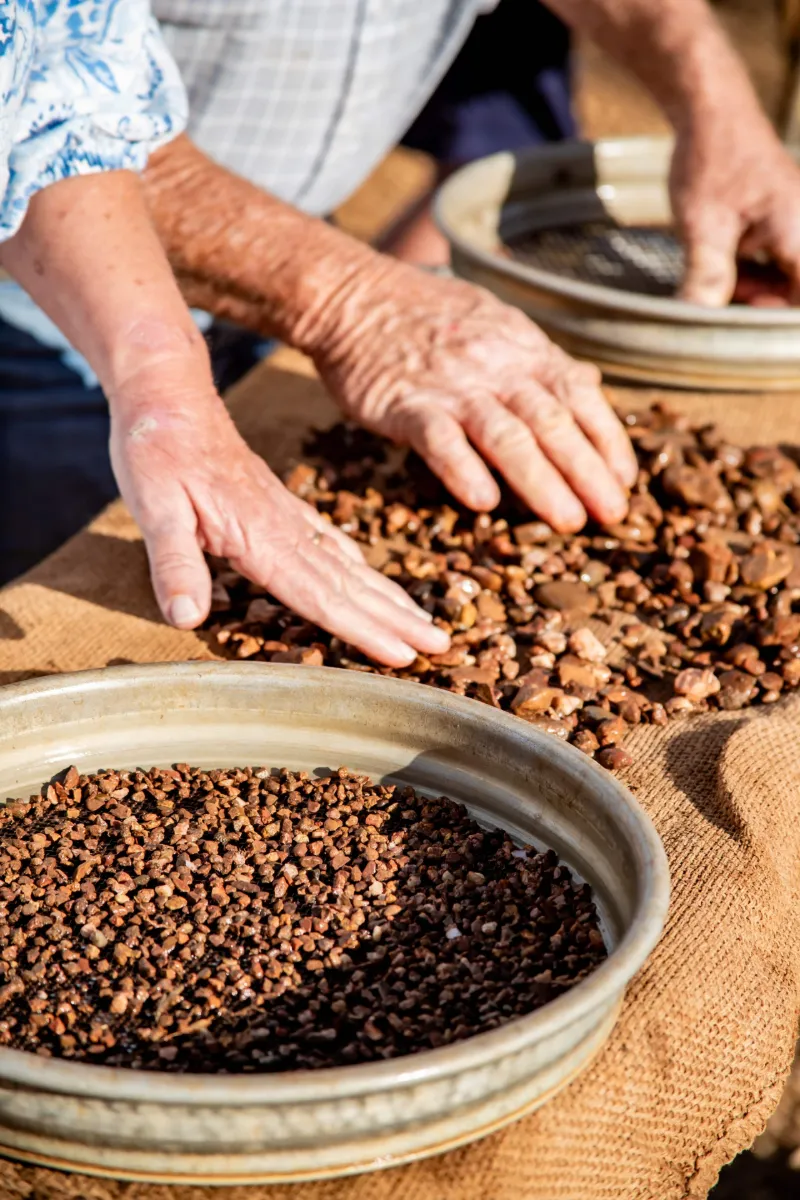
How the sapphires got here, the tools, and how to spot the colour in your sieve.
Read the guide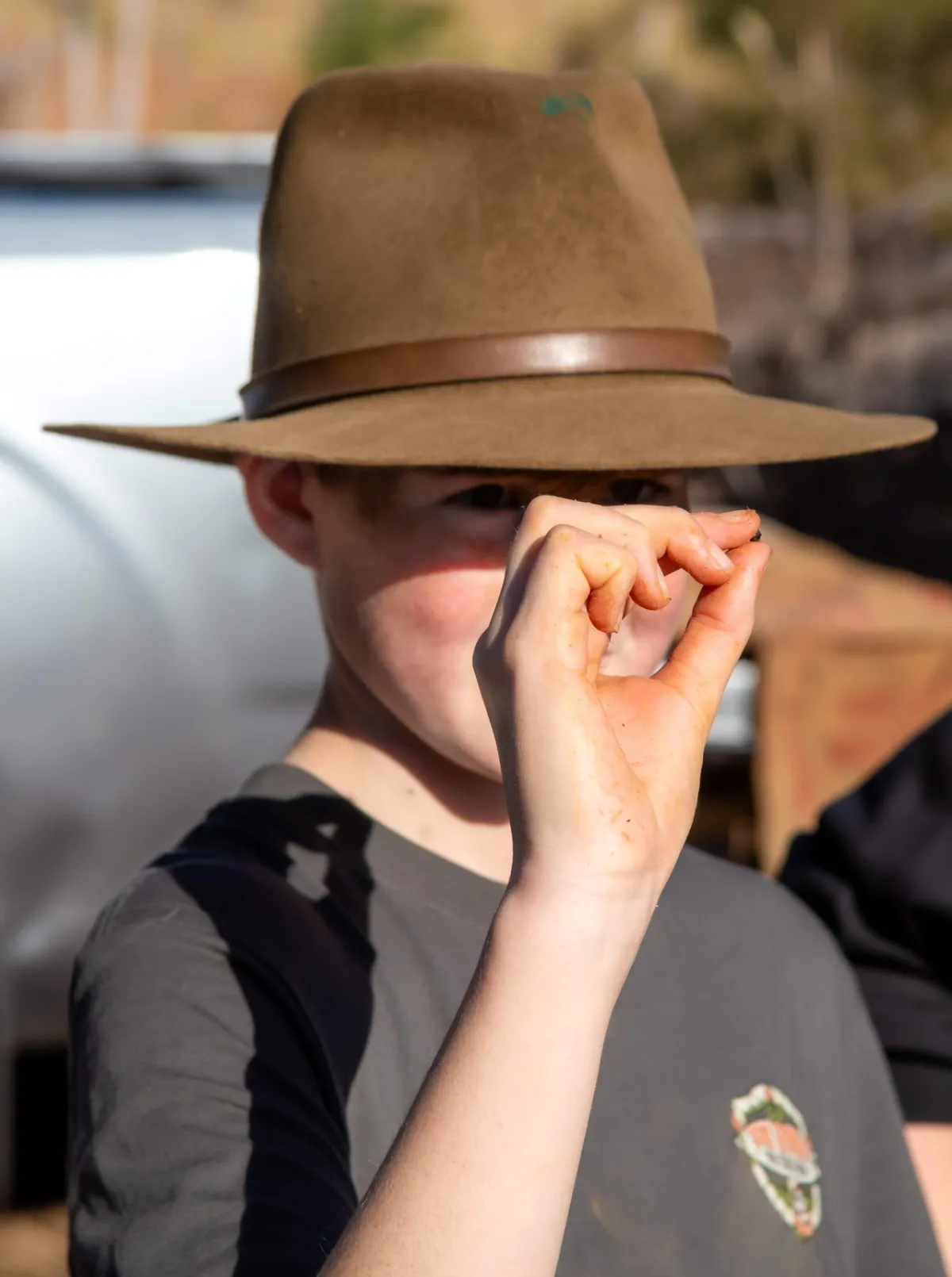
Guide
First-Time Fossicking
Everything a newcomer needs for a great first morning on the diggings.
Read the guide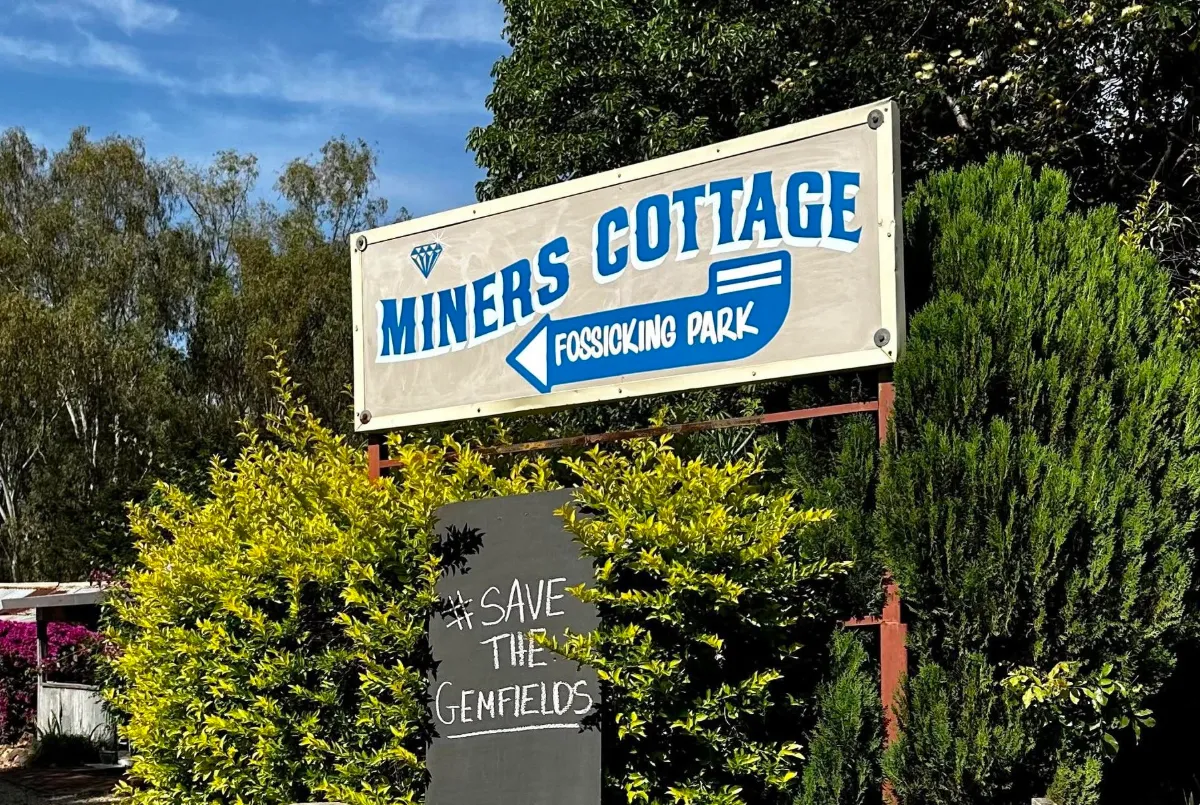
Guide
Rubyvale
The heart of the Gemfields, with history, characters and plenty to do.
Read the guide