
GEMFIELDS GUIDE
Sapphire fossicking on the Queensland Gemfields
Millions of years ago, volcanoes carried sapphires up from deep inside the earth. Today they're waiting in the gravel beneath your feet, and with a sieve, a tub of water and a little know-how, you can find one yourself.
THE SHORT ANSWER
Sapphire fossicking is searching for sapphires by hand. You dig up gem-bearing gravel, sieve it in water so the heavy stones settle together, then pick out the glassy, colourful ones. On the Central Queensland Gemfields around Rubyvale, Sapphire, Anakie and the Willows, you can fossick in signposted public fossicking areas with a Queensland fossicking licence, or start at a fossicking park or on a guided tour where everything is ready for you.
On this page
At a glance
- Where: the Central Queensland Gemfields, almost 900 square kilometres of sapphire country about 45 minutes west of Emerald
- What you'll find: blue, green, yellow and parti sapphires, plus zircons and black spinel
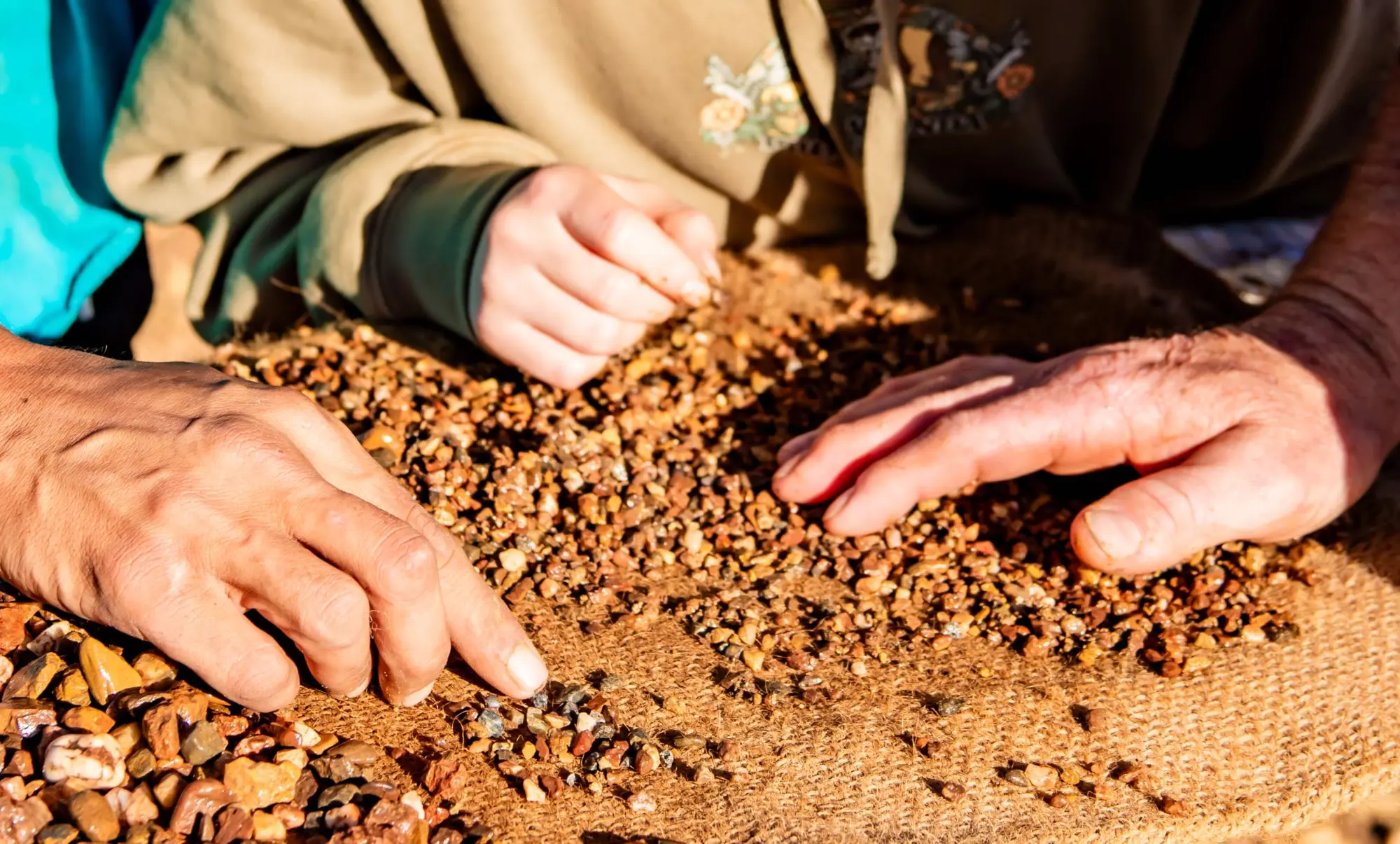
- How it works: dig, sieve, swirl and flip in water, then sort in the sunshine
- What you need: a Queensland fossicking licence for public areas, hand tools, a sieve and plenty of water
- Easiest start: join the Tag Along Tour (permit included) or try a bucket at Rubyvale Miner's Cottage (licence-free)
A VERY LONG JOURNEY
How did sapphires get to the Gemfields?
The sapphires you'll find around Rubyvale have travelled a very long way to reach your sieve. Here's their journey in four steps.
1. Grown deep underground
Sapphires and zircons crystallised deep in the earth, around the boundary between the crust and the mantle.
2. Carried up by volcanoes
Between roughly 65 and 15 million years ago, volcanoes erupted across this part of Central Queensland. The rising basalt and ash picked up sapphire crystals on the way and carried them to the surface.
3. Sorted by ancient rivers
Over millions of years, the volcanic rock weathered away and freed the sapphires. Ancient streams carried them downstream and, because sapphires are heavy, they settled in the gravel beds.
4. Buried and waiting
Those old stream gravels now lie in sheets beneath the soil, sometimes just under the surface and sometimes many metres down. This is the gem gravel fossickers dig today.
READING THE GROUND
How do you read the ground?
Sapphires sit in a particular layer, so learning to spot it is the first real skill of fossicking.
- Topsoil and fine gritBrown or black soil and fine grit sitting on top. This layer is usually barren.
- Grey clay (in some places)At sites like Glenalva and Middle Ridge, a pale grey clay thought to be old volcanic ash sits below the gravel.
- Gem gravelThe layer you're after. Look for rounded pebbles of quartz and hard sandstone (locals call it billy) set in red-brown, chocolate or grey clay. It can be a few centimetres to over a metre thick.
How deep is the gem gravel?
| Area | Typical depth |
|---|---|
| Glenalva, Big Bessie, Graves Hill | Under half a metre |
| Willows (some diggings) | Under half a metre |
| Rubyvale (near town) | Around 2 metres, deeper in places |
| Divide | 2 to 3 metres |
| Scrub Lead | 3 metres to more than 12 metres |
Fossickers can dig to a maximum of 2 metres, so the shallow areas are the best place to start.
THE KIT
What tools do you need for sapphire fossicking?
Fossicking is done entirely with hand tools, and the kit is simple.
Pick and shovel
For breaking up and lifting the gem gravel.
Sieves
A set of nested sieves sorts the gravel by size, with a coarse sieve on top and a finer one underneath.
Tub of water
Wet sieving is the heart of sapphire fossicking, so bring a large tub and plenty of water.
Willoughby
A hand-operated washing rig with a spring-loaded handle. You rock the sieve in a tub of water and the heavy stones gather in the middle. A Gemfields favourite.
Sorting table
A flat surface in the sunshine for turning out your sieve and searching through it.
Tweezers and a container
For picking up your finds and keeping them safe.
JEB'S METHOD
How do you fossick for sapphires, step by step?
This is how Jeb teaches it out on the diggings.
 1
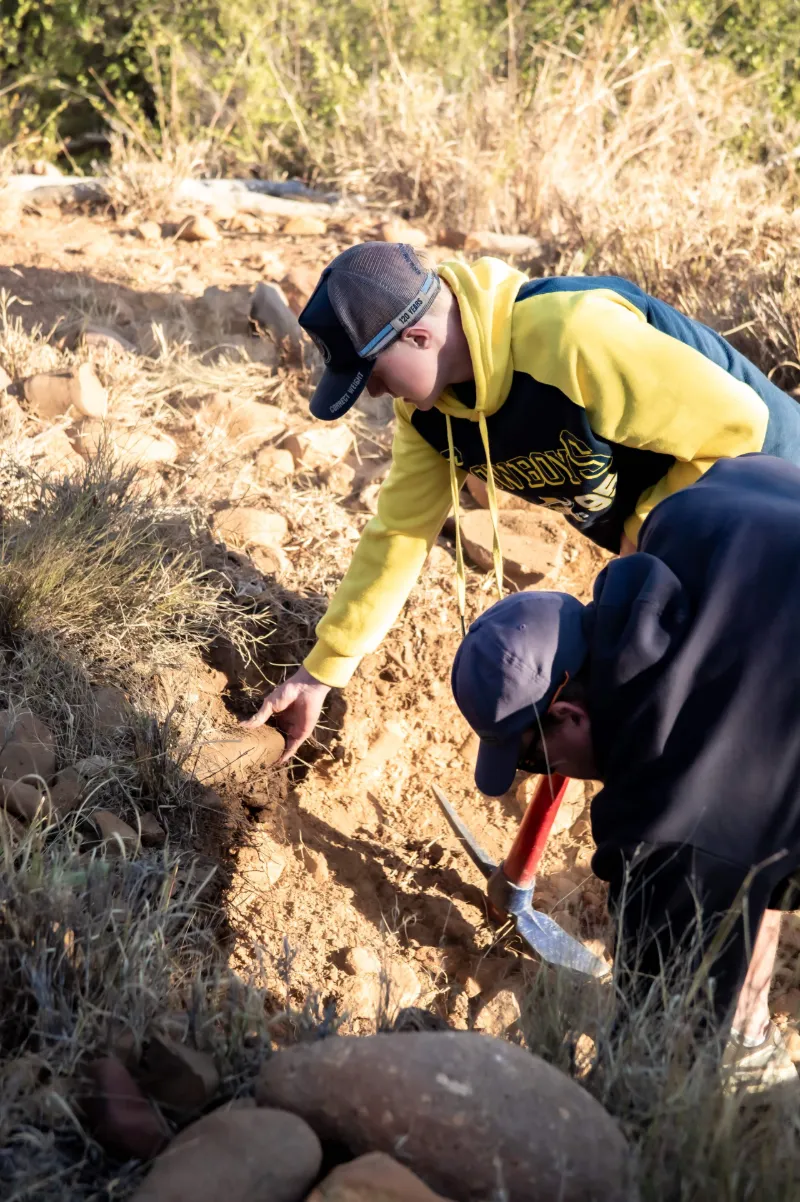
Dig the gem gravel
Find the gravel layer and dig out enough to fill a bucket or two.
 2
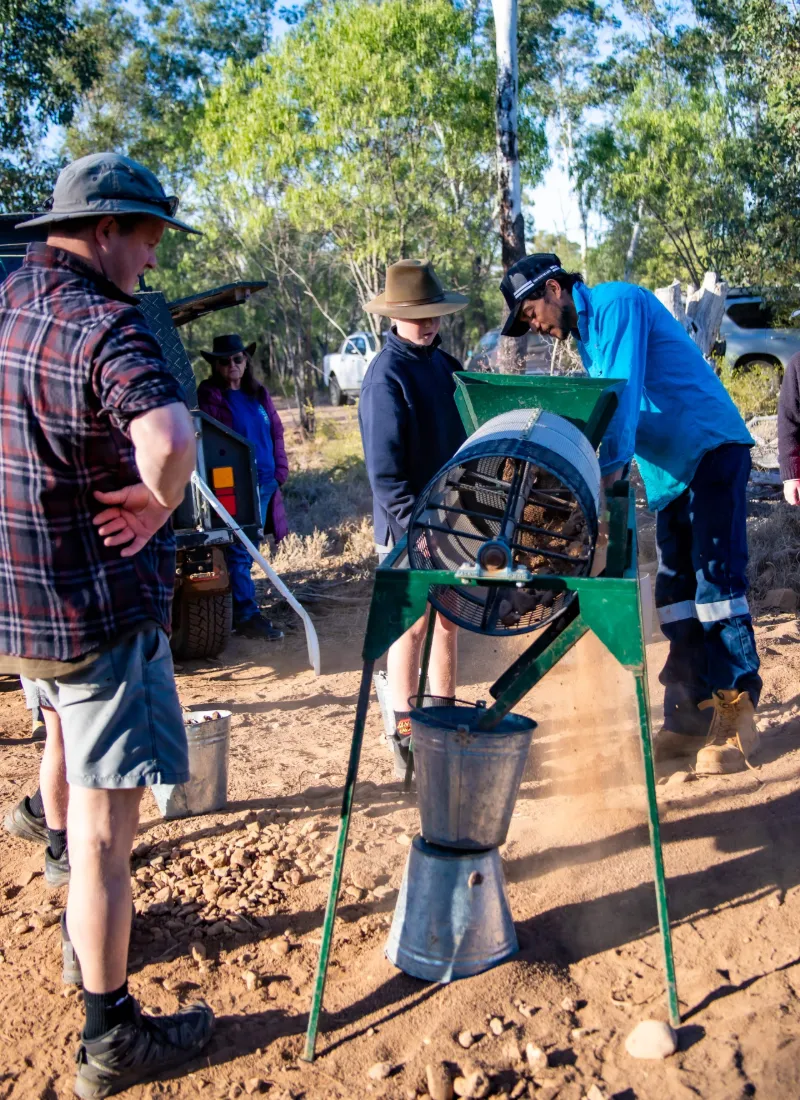
Dry sieve
Shake the gravel through your coarse sieve to remove the big rocks and dust. If the gravel is full of clay, soak it in water first to break it down.
 3
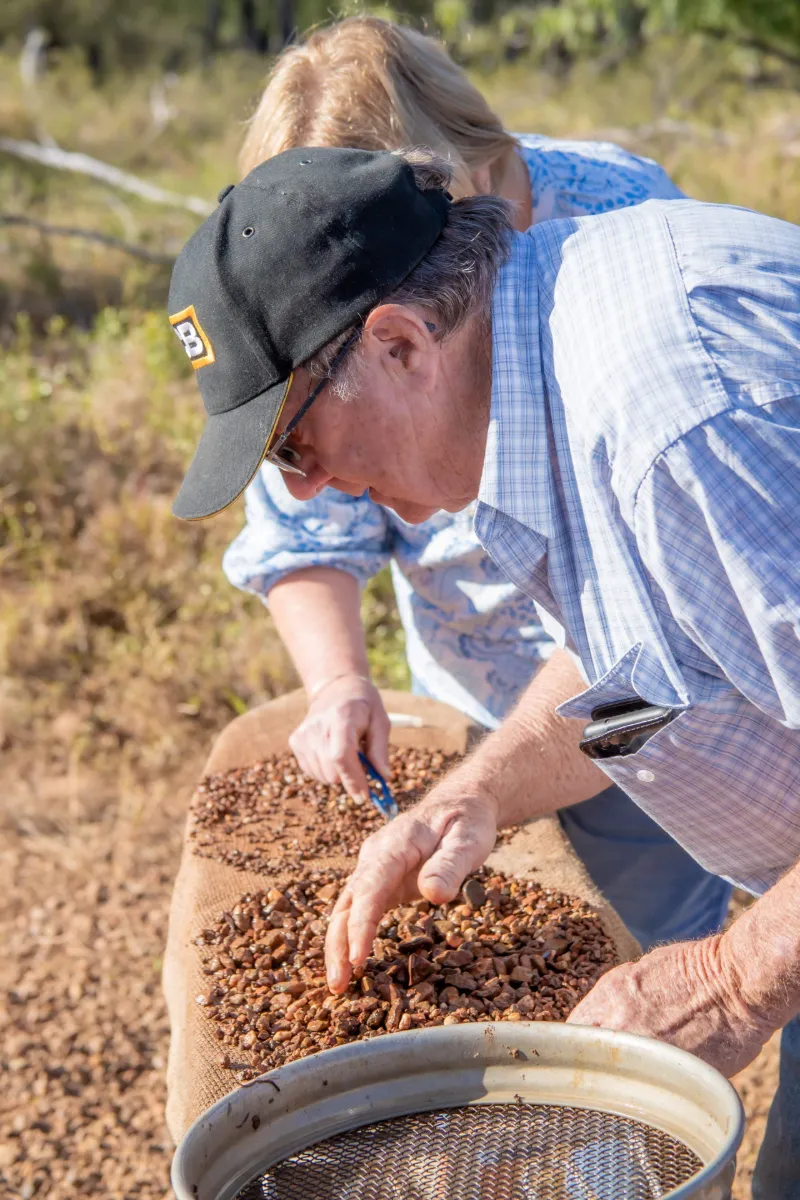
Swirl and flip
Lower the sieve into water and shake it in a circular motion with a gentle up-and-down action. Sapphires are much heavier than the quartz around them, so they work their way to the centre and bottom. Pat the gravel level, then flip the sieve over onto your sorting table in one smooth movement. The sapphires now sit in the middle, right on top.
 4
Spot the colour
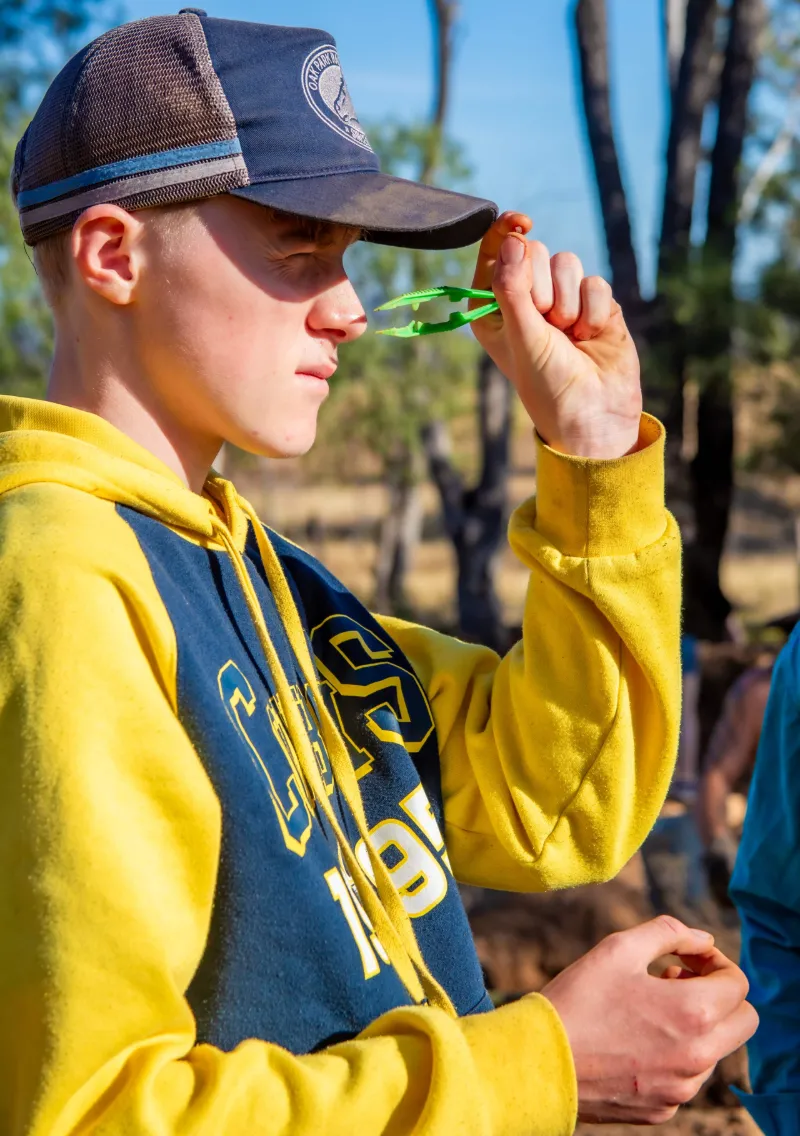
Search the centre of the pile in good sunlight. Look for a glassy shine, a hint of colour and the classic six-sided barrel shape. Hold anything promising up to the sun and look through it.
WHAT'S IN YOUR SIEVE?
Is it a sapphire or a zircon?
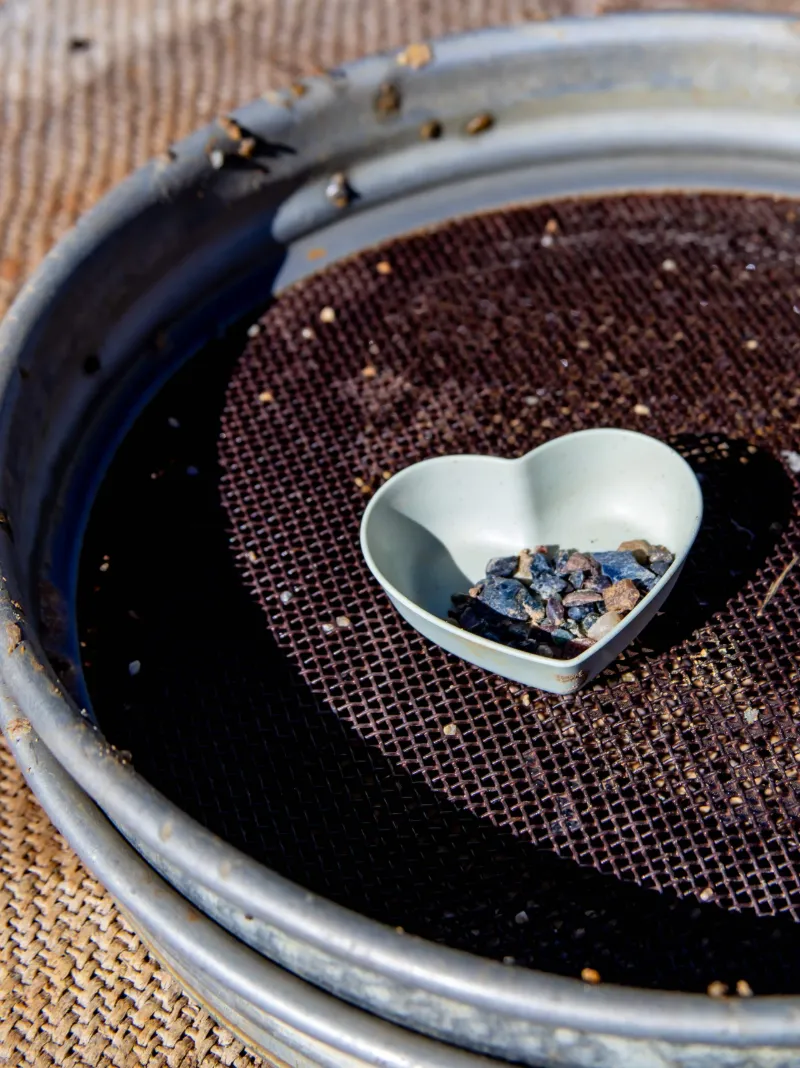
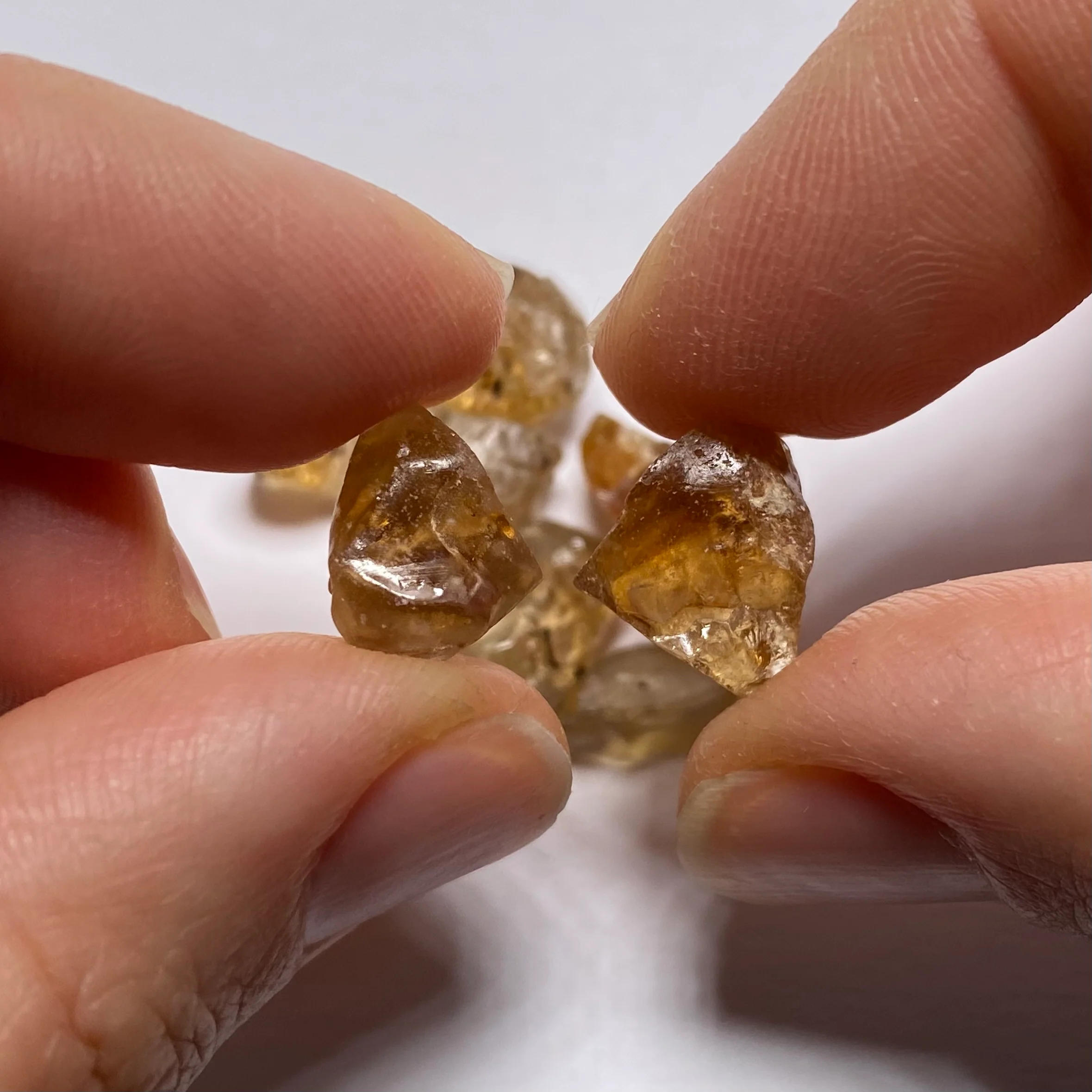
Zircons and black spinel turn up in the same gravel as sapphires, so knowing the difference is part of the fun.
| Sapphire | Zircon | Black spinel | |
|---|---|---|---|
| Shape | Six-sided barrels and tapered spindles, often rounded | Square prisms with pointed ends, often rounded | Sharp eight-sided crystals |
| Shine | Glassy, silky glow | Very bright, almost diamond-like | Bright to dull black |
| Colour | Blue, green, yellow, parti | Red-brown, honey, yellow, colourless | Black |
| Hardness | 9 | Around 7.5 | 7.5 to 8 |
| Weight | Heavy | Heavier still | A little lighter |
Handy tip: a dark stone that looks like a bit of black gravel can turn out to be a deep blue sapphire once you hold it to the light, so check every dark stone against the sun. Our guide to Queensland sapphires covers the colours you'll find and what makes a stone valuable, and our parti sapphire guide explains the famous two-tone stones.
LICENCE AND RULES
Do you need a licence to fossick for sapphires?
Yes, for Queensland's public fossicking areas. A Queensland fossicking licence takes a few minutes to buy online, arrives by email and can be carried on your phone. A family licence covers your partner and the children living with you.
You can fossick licence-free at a fossicking park such as Rubyvale Miner's Cottage, and your fossicking permit is included on the Tag Along Tour. Our guide to fossicking licences in Queensland has everything you need.
The main rules
- Use hand tools only.
- Dig to a maximum of 2 metres deep, or half a metre in a stream, with no tunnels or overhangs.
- Fossick on designated fossicking land, in fossicking areas, or on private land with the owner's permission.
- Keep clear of mining claims and leases unless the holder has given you permission.
- Keep your gemstones. Selling the odd lucky find is fine, and regular selling needs a different permit.
- Camping on designated land needs a fossicking camping permit.
FOSSICK WITH CARE
How do you fossick responsibly and safely?
The Gemfields are a working, living landscape, and a little care keeps them that way for everyone.
- Fill in your holes before you leave and take all your rubbish with you.
- Leave the trees and plants standing, clearing only the spot you're digging.
- Give stock room. Cattle, horses and the odd camel graze freely on the Miners Common, so drive slowly and leave them in peace.
- Carry plenty of water. Many fossicking areas have no water, so bring enough for drinking and sieving.
- Dress for the sun with a hat, sunscreen, sturdy boots and gloves, and pop on safety glasses when breaking rocks.
- Stay well back from old shafts, mine dumps and steep banks.
- Tell someone your plans and fossick with a friend. In an emergency, call 000.
WHERE TO FOSSICK
Where can you go sapphire fossicking?
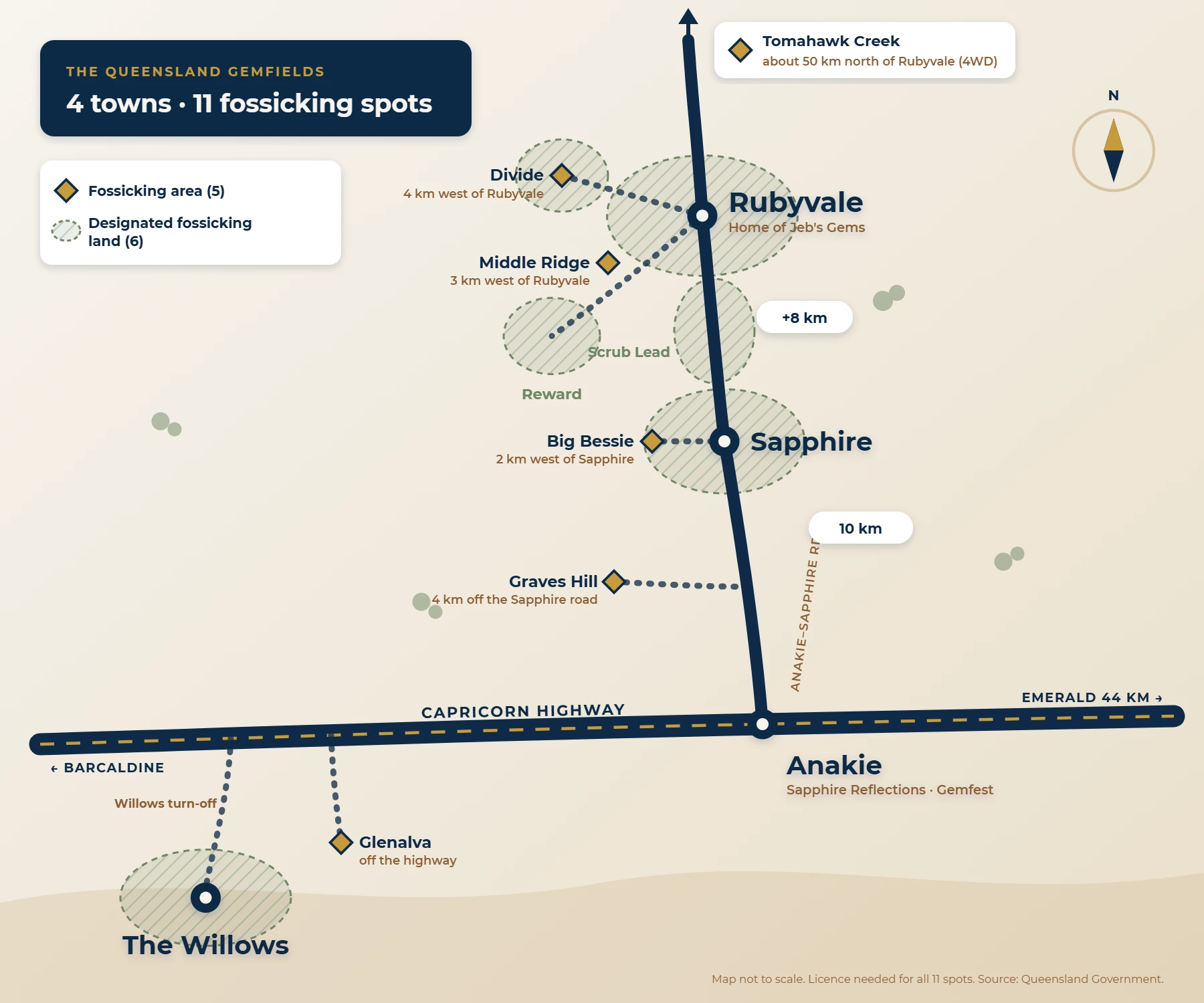
The Central Queensland Gemfields have six designated fossicking lands and five fossicking areas, all signposted and shown on the Queensland Government's maps.
| Area | Good to know |
|---|---|
| Sapphire | Red clay gravel with fine blue stones close to the surface, and drinking water available |
| Rubyvale | Close to town, with deeper gravel |
| Scrub Lead | Known for some of the best stones on the field, especially blues, with deep gravel |
| Divide | Gravel usually 2 to 3 metres down |
| Reward | Remote, with deep gravel and a shallower digging at the Washpool |
| The Willows | Famous for greens, yellows and star sapphires. See our Willows guide |
| Glenalva | Shallow gravel, with greens, yellows and the occasional black star |
| Middle Ridge | Near Sapphire, with good blues and plenty of zircons |
| Big Bessie | Shallow gravel, bring everything you need |
| Graves Hill | Close to Sapphire, shallow gravel with blues, greens and yellows |
| Tomahawk Creek | Remote, about 45 kilometres north-west, known for good blues |
Prefer to start close to town? Fossicking parks sell buckets of gem-bearing gravel, ready to sieve, with help on hand, licence-free. Rubyvale Miner's Cottage is one of them, right in Rubyvale.
FOSSICK WITH JEB
Two ways to find your own sapphire
Head out on the diggings with Jeb, or sort a bucket right here in Rubyvale. Either way, every stone you find is yours to keep.
EVERY DAY, YEAR ROUND
Jeb's Gems Tag Along Tour
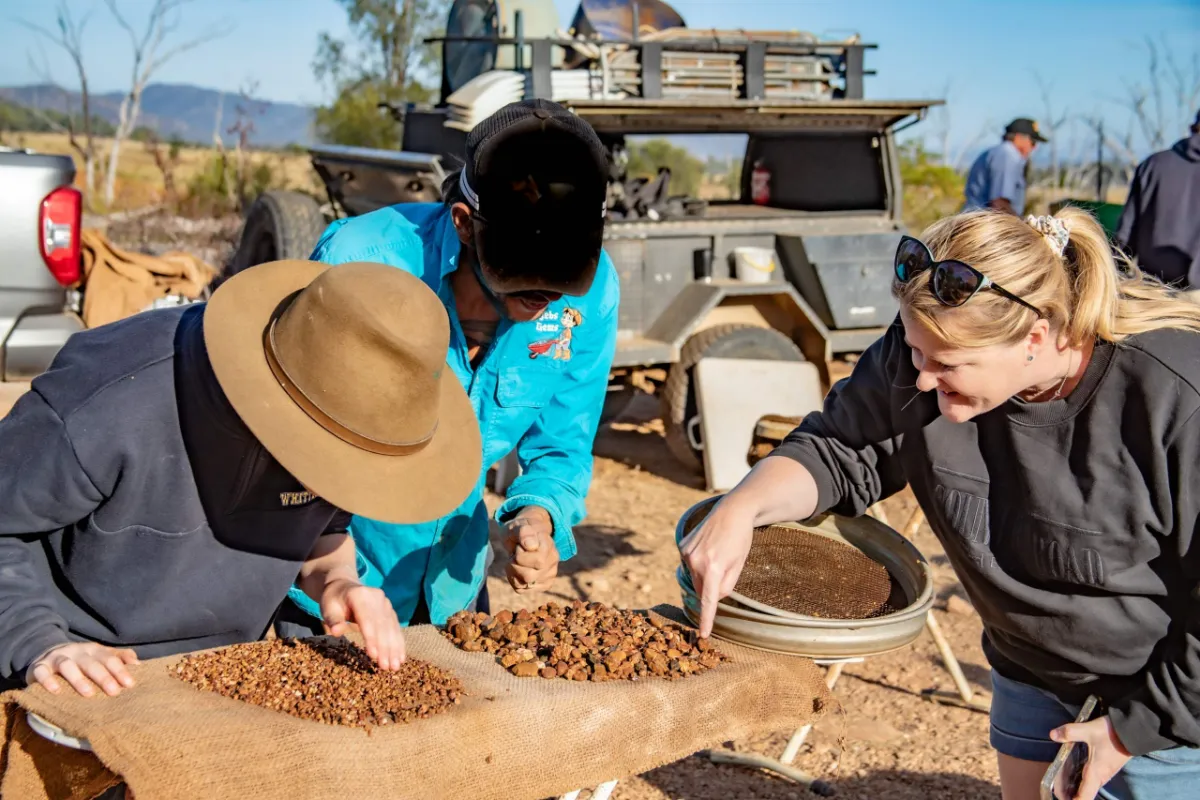
Spend a morning on the diggings with Jeb, Queensland's Top Tour Guide 2026. Follow him out in your own high-clearance 4WD to whichever fossicking area is producing. Every guest is handed a sapphire before we even start, and your fossicking permit and all the gear are included.
Daily from 8.00am · From $75 per adult · High-clearance 4WD needed
1 MARCH TO 31 OCTOBER
Rubyvale Miner's Cottage
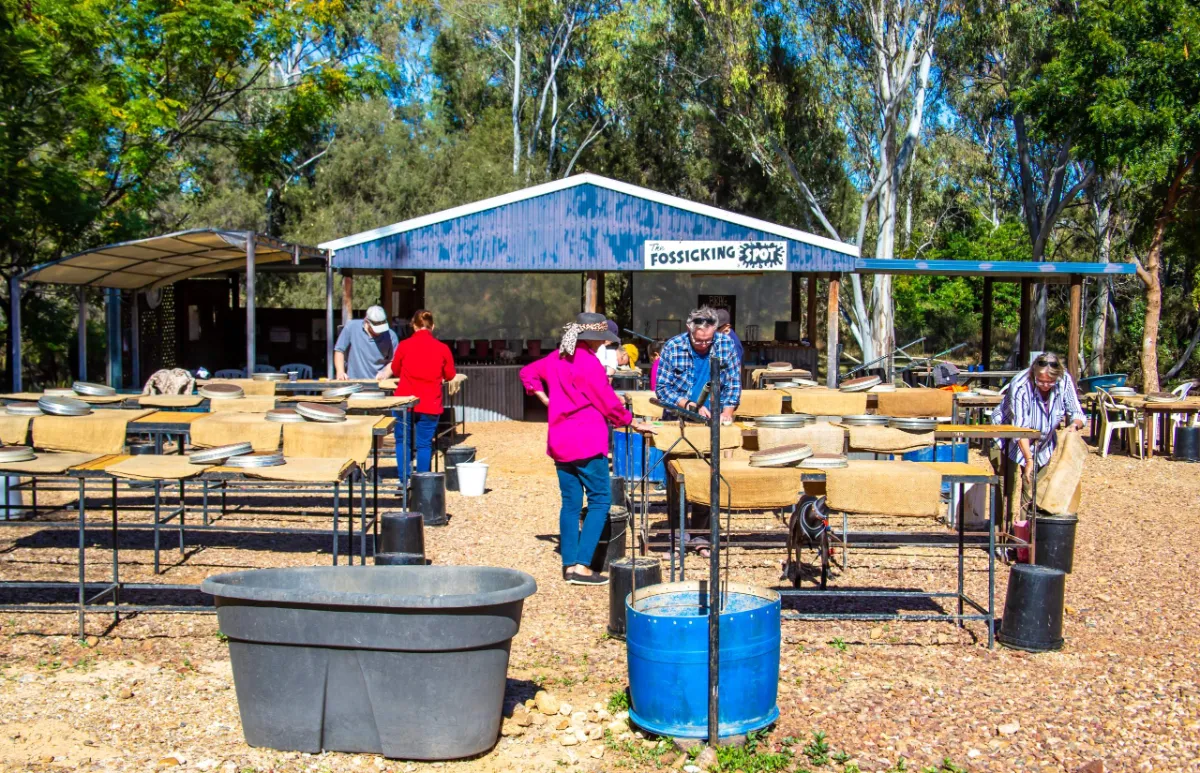
The easy way to start, right in town. Choose your fossicking option and sort through it at the tables with friendly help on hand. It's licence-free, and any car will get you there.
Open daily 9.00am to 12.00pm · From $35
QUESTIONS
Sapphire fossicking questions, answered
Where is the best place to go sapphire fossicking in Queensland?
The Central Queensland Gemfields around Rubyvale, Sapphire, Anakie and the Willows, about 45 minutes west of Emerald. Scrub Lead is known for fine blues, the Willows for greens and yellows, and shallow areas like Glenalva and Graves Hill are great for beginners.
Do you need a licence to fossick for sapphires in Queensland?
Yes, for public fossicking areas. You can buy a Queensland fossicking licence online in minutes. Fossicking parks are licence-free, and the permit is included on the Tag Along Tour.
How deep are sapphires on the Gemfields?
It depends on the area. In places like Glenalva and Graves Hill the gem gravel sits within half a metre of the surface, while at Scrub Lead it can be more than 12 metres down. Fossickers can dig to a maximum of 2 metres.
How do you tell a sapphire from a zircon?
Sapphires are often six-sided barrels with a glassy glow, while zircons tend to be square prisms with a very bright, almost diamond-like shine and red-brown or honey colours. Sapphire is also harder, at 9 compared with about 7.5.
What colour are Gemfields sapphires?
Blue, green, yellow and gold, plus parti sapphires with two or three colours in one stone, and star and black star sapphires.
What tools do you need for sapphire fossicking?
A pick, a shovel, a set of sieves, a tub of water and a sorting table. Many Gemfields fossickers also use a willoughby, a hand-operated rig for washing sieves.
Can beginners find sapphires?
Absolutely. Plenty of first-timers find sapphires on their very first day, especially with someone showing them what to look for. A fossicking park or the Tag Along Tour is the easiest place to start, and our first-time fossicking guide covers everything else to know before your first day.
Can I keep the sapphires I find?
Yes. Gemstones you find while fossicking are yours to keep, and selling the occasional lucky find is fine.
Last updated 07/10/2026. Facts checked against the Queensland Government fossicking rules and Central Queensland fossicking areas, Central Queensland Highlands, the Australian Museum and GIA.
YOUR FIRST SAPPHIRE IS WAITING
Ready to try it for yourself?
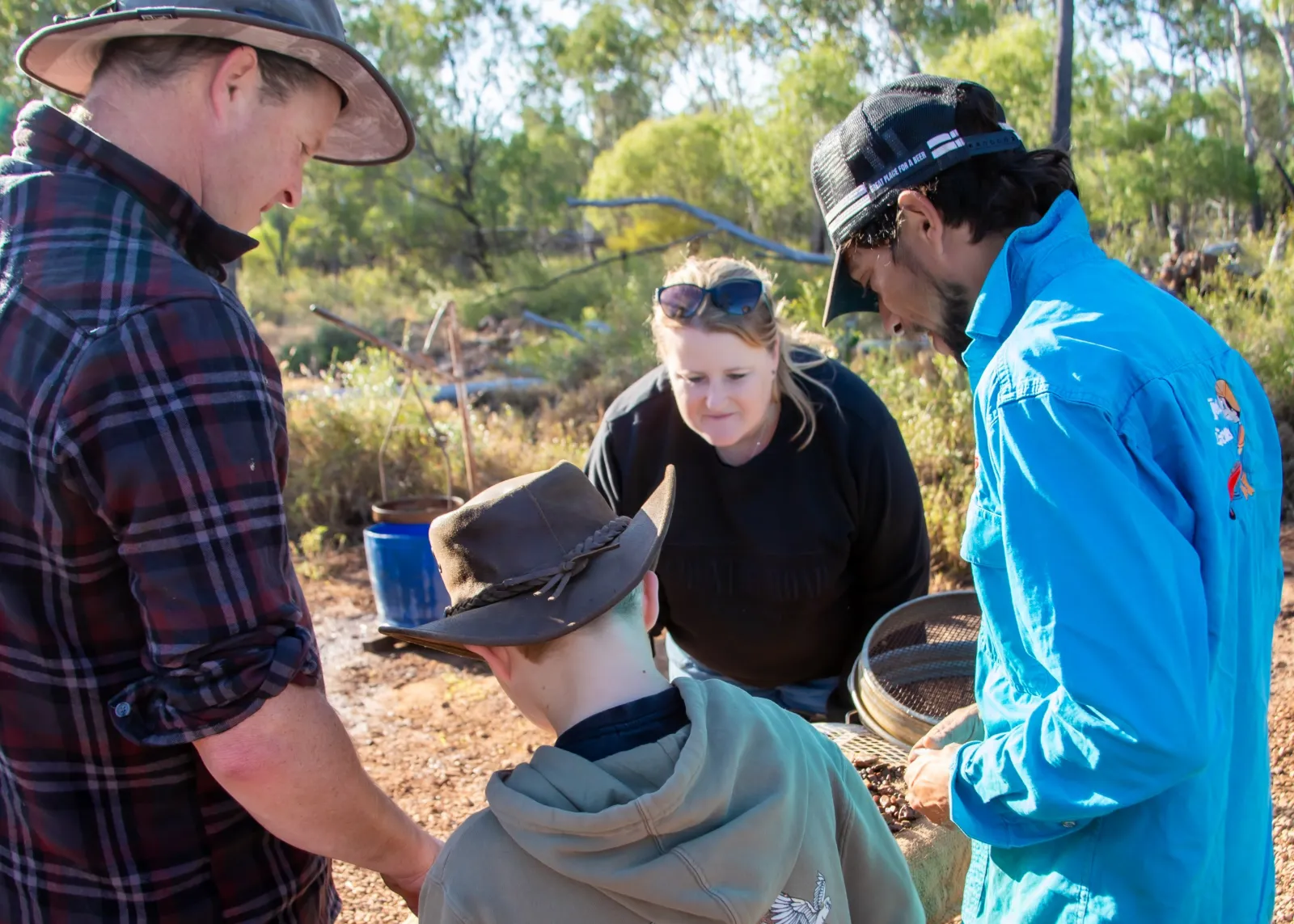
Grab your licence and head for the diggings, or let Jeb show you the way on your first morning.